The Work
The Feed the Renders Grew Out Of
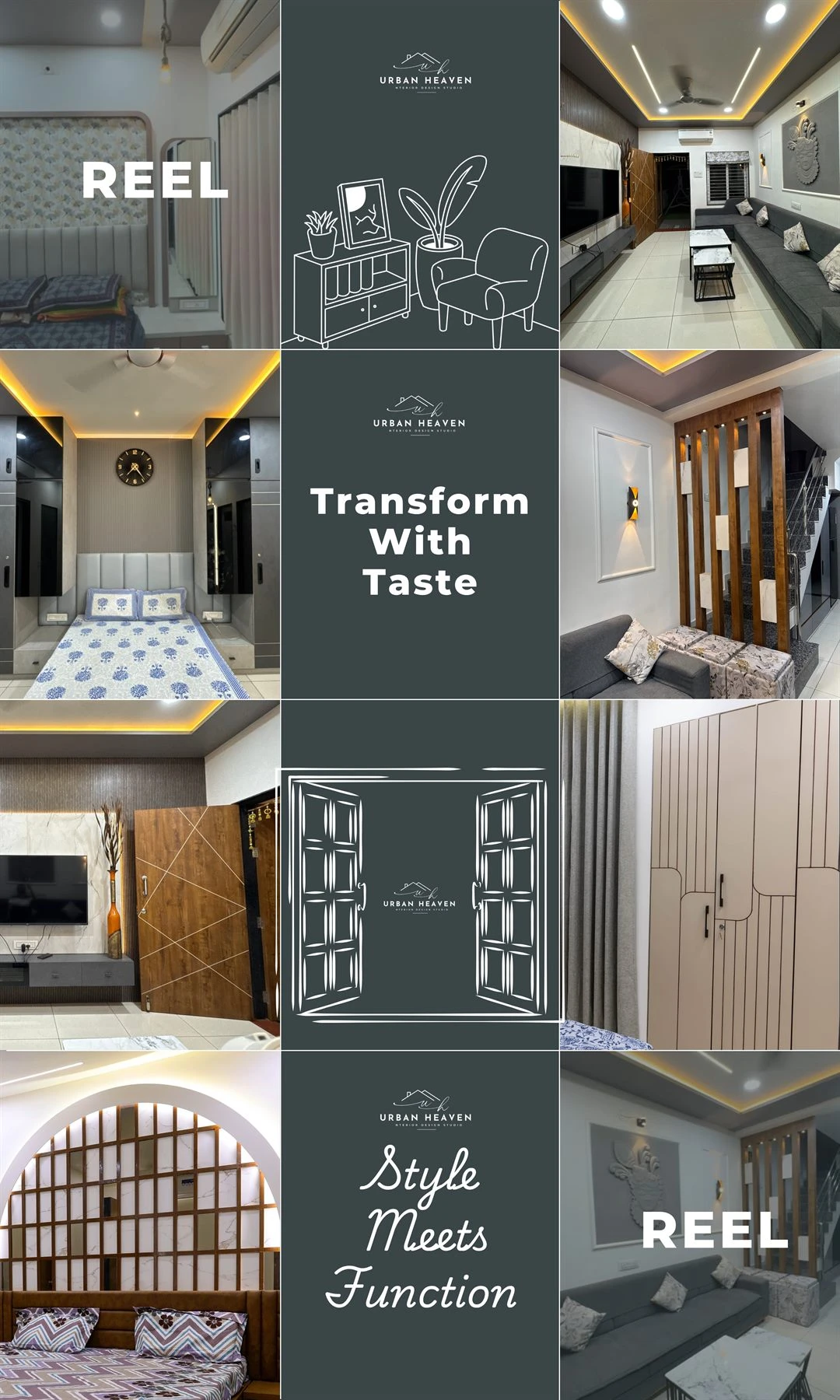
Interior design studio · A three-to-five-month core engagement · Social media, office 3D renders and brand identity direction
Urban Heaven Interior is an interior design studio that wanted two things from one partner: marketing content and real design deliverables. Across a core engagement of three to five months, Safar Spectrum Media ran the studio's social media, produced 3D renders of office interiors it could sell concepts with, and shaped a premium brand identity. What started as social media alone grew into a three-part engagement as the studio kept handing SSM more to do.
No lead count or follower-growth figure appears on this page. Neither is on record for this client. What the record does show is the scope of work, the length of the engagement, and how much that scope grew while it ran.
Urban Heaven Interior came to Safar Spectrum Media needing more than a busier Instagram grid. The studio wanted an audience, yes, but it also wanted design assets it could put in front of a paying client. Those are two different jobs, and most studios hire two different suppliers to cover them.
The design side was specific. Urban Heaven Interior needed 3D renders of office interiors it could use to sell a concept before a single wall went up. A render lets a client walk through the finished room on a screen and approve it, or change it, while changes still cost nothing. That is a sales tool, not a social post, and it had to be accurate enough for the team to build from.
The brand carried a brief of its own. The studio wanted its identity to read premium and corporate, closer to a national player than a local operator. Its logo brief named the benchmark directly: Livspace, and that company's minimal, geometric look. Generic was the thing to avoid.
Keeping content, renders and brand under one roof was the point. It is the kind of full-service engagement SSM takes on when a client would rather brief one team than manage three.
SSM took over the account end to end: campaign planning, photography and a consistent posting rhythm, so the grid stopped going quiet for weeks at a time. For an interior studio the feed is a portfolio, so shoots were planned around finished projects and the details clients actually ask about. Planning that far ahead is easier with a fixed schedule, the same idea behind a simple content calendar that keeps a small business posting without a daily scramble.
The renders were office space visualisations, built to be shown to Urban Heaven Interior's own clients. This is where 3D interior rendering services stop being a marketing line item and become part of how a studio closes work. A prospect sees the proposed office, signs off on it, and the studio builds from an approved picture instead of a description. The same renders doubled as content afterward, but the client meeting came first.
The brand direction centred on a flat vector "UH" lettermark. The two letters intertwine so the outline reads as the silhouette of a house roof. The palette pairs green, for growth and comfort, with gray, for sophistication. The system stays minimal and geometric and skips realistic shading on purpose, because flat reads as more corporate. Livspace was the reference point the studio asked for, so the work was measured against that kind of premium interior brand identity rather than a local-designer look.
The engagement started with social media alone. As the renders and the brand work were added on top, it grew into a three-part engagement covering content, 3D visualisation and identity, run as one relationship instead of three separate jobs, and each addition tracked the work rather than a renewal date. Content marketing for architecture and design firms tends to expand like this once a studio sees renders and brand pulling in the same direction as the feed.
The clearest signal here is the scope itself. Across a core engagement of roughly three to five months, the relationship grew from social media alone to include 3D renders and then a full brand identity, and it grew because Urban Heaven Interior kept handing SSM more to do, not because a contract came up for renewal.
Behind that sits a longer history. The studio's content work with SSM runs on and off across nearly two years of records. That is a working relationship a client keeps coming back to, not a one-month trial that ended.
This page carries no lead count and no follower-growth percentage, because neither was tracked for this client in a form worth quoting. Calling it a spike would be a guess. What is documented is the scope, the timeline and how the engagement widened over time, and for this client that is the honest version of the result.
With the feed treated as a portfolio. For Urban Heaven Interior, Safar Spectrum Media handled campaign planning, photography and a steady posting schedule, building shoots around finished projects rather than filler. The aim is an account a prospective client can scroll and trust before the first call.
Yes. SSM produced 3D renders of office interiors for Urban Heaven Interior that the studio used to sell design concepts to its own clients before construction. The renders worked as social content too, but they were built first as a sales deliverable the studio could present in a meeting.
Restraint, mostly. Urban Heaven Interior's brand direction used a flat "UH" lettermark shaped like a house roof, a green-and-gray palette and a minimal geometric system with no realistic shading. The studio benchmarked it against Livspace, so the identity was built to sit next to a national brand, not a local one.
Our playbook on marketing an interior design business on Instagram covers the content layer that sits on top of an engagement like this one. You can also see more interior design work in the portfolio, or read the rest of our case studies.
We use cookies to understand how the site is used and to improve it. You can accept or decline analytics & ads cookies. Privacy Policy.